

 Brothers and sisters in gaming? It is all bullshit.
No relatable story or labored metaphor to start this essay, let’s get right down to it. Today’s game is UNBEATABLE. What we have here is a rhythm-adventure game that was kickstarted in 2021, and released in December of 2025. One way or another, this is a contemporary game birthed in a post-Psychonauts 2 world (I am sure other games were released in 2021, but nothing comes to mind). And as for that “rhythm-adventure” genre? Well, the rhythm game portions of UNBEATABLE are similar to Muse Dash, with an emphasis on two-button tapping and notes that appear on an upper or lower track. But between song segments, you have an entire adventure game that draws inspiration tracing all the way back to King’s Quest. You are the stranger in a strange land, there is a great big world out there, and you are going to talk to the right people, interact with the right objects, and “click on” whatever it takes to survive and make progress. Throw in those rhythm battles at plot-significant moments (or when you just want to beat up a cop), and you have a fun, unique premise for a videogame.
And it is right about here where I will note that UNBEATABLE was one of my contenders for 2025 game of the year. It also may be the worst game I played in 2025.
It’s… complicated.
We covered the whole “adventure game” thing, right? And do you remember why people played adventure games back in the DOS days? A big factor was a plot and presentation you would not find on a console. Mega Man is amazing, but “robot beats other robots” is not exactly Shakespeare. And, yeah, alright, King’s Quest VI: Heir Today, Gone Tomorrow was not Shakespeare either, but it did contain memorable characters, a plot that could showcase a byzantine world, and honest-to-God jokes. Mario could only generate a laugh when a blooper spawned right on his hat, but a witty retort from Guybrush Threepwood could put Jim Carrey to shame (look, it was the 90’s, we didn’t have a lot of options). As time went on, it became more and more common to see some of the old adventure genre’s innovations on the (not coincidentally now disc-based) consoles. Thus, as jokes, complicated dialogue, and plots that could rival Guin Saga became commonplace, many games… normalized. Slurryized? You have to get forty hours of content from somewhere, and if you give us a hero that is going to watch their hometown get destroyed, a rival that will begrudgingly join the party at a pivotal moment, and a love interest that is a Strong, Independent Woman but will show tenderness to the protagonist; well, that is just safe planning. The authors know the beats that have to happen, and the audience stands up and claps like a seal when the heteronormative protagonists tentatively start tonguing right before the final dungeon.
 UNBEATABLE is not that. Or… well… Okay, technically this is an isekai. Beat is our heroine (is she titular? Is that how that works?), and she is dropped into a “different world” where her greatest skills (rockin’ out an’ punchin’ cops) catapult her to an important position that would have been impossible in her home world. She gains a supporting cast that sports a variety of neon hair colors, and her opponents are members of a fascist organization that could not be more obviously evil if they started heading concentration camps (which, uh, they basically are). In the end, our heroine will see her adopted world saved, she will achieve the kind of stardom she could only imagine back in her mundane existence, and she might just get to beat the crap out of some bad guys along the way. This is a tune you’ve heard before.
But, while all of those statements are true, UNBEATABLE is not about the giant robots, but the pilots. Wait. Shit. No! It’s not that cliché either! I swear!
Let’s really get down and dirty with UNBEATABLE. It is absolutely 90% cliches by volume. In fact, it is really easy to compare UNBEATABLE to Neon Genesis Evangelion: in both cases, you are dealing with a series of episodes that initially appear to be basic anime nonsense (pink-hair musician saves the world / mecha pilot boy fights giant monsters), but gradually escalates to something more cerebral. In both Neon Genesis Evangelion and UNBEATABLE, the metaphor gradually degrades from “fighting absurd monsters represents loneliness or something” to “here is the protagonist sitting alone in a chair, and they are going to shout their various neuroses at you”. Neon Genesis Evangelion’s famous (first) finale hit the airwaves in March of 1996, and there are many examples in the last 30 years of numerous media trying the same trick. Is it common? Absolutely not. The finale of How I Met Your Mother did not, to my knowledge, involve anyone conjuring a Baloney Pony reality. But is it something you have likely seen before? Absolutely. It is reasonable to say that UNBEATABLE is not the most cliched story out there, but it is by no means wholly original.
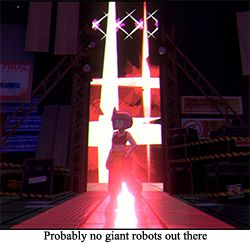 And that is all preamble to state this: UNBEATABLE’s presentation and story is so immaculate, it taught me to love again. … Erm… That is to say, as someone who plays videogames far too much, I earnestly thought I was done with “videogame plots”. On my recent replay of Persona 5 (Royal), I was continually reminded how much I wanted to skip roughly 75% of the dialogue. The plot and character relationships are supposed to be the best parts! But so much of the narrative (including the brand-new content found in the Royal edition) is trite and predictable. While it would make no sense for the teenage protagonist to figure out everything as quickly as the seasoned (re: old) player behind the controller, there is a part of me that would rather jump off the school roof than read another eighty lines of dialogue about the party slowly realizing that the only person with a laughing maniacally character portrait might be the bad guy. In short, thanks to pouring over decades’ worth of the same, laborious nonsense over the years, I thought I was done with focusing on videogame writing. I do not need to absorb “the plot” of the latest Final Fantasy if the gist of it is going to be “slavery bad”. I already knew that! I knew that in third grade!
But UNBEATABLE? It stars a teenage (well, technically she’s 20 at the start of the game, but I think anyone younger than 35 is a teenager) heroine, her preteen sidekick, and supporting characters that are generally different flavors of disaffected youth. They are dumb kids I would ignore in real life. And I hang on their every word. Are they wannabe adults that speak on “my level” and thus hold my interest? Of course not! Nobody wants that! But their interests go beyond “we gotta beat the bad guy” and “one character trait to make ‘em interesting”. So many games (and every goddamned Persona game for the last twenty years) has the best friend character that exists to tickle your balls about how great you are and then gawk at the women in the cast. He does not exist here! In his place, you have people with real, relatable issues. Maybe it’s the drummer that resorts to violence when she cannot get articulate thoughts out of her mouth, or the marketing executive that cannot admit she actually likes accomplishing her goals, but, one way or another, we have a story here filled with characters that are fascinating. And it trickles down, too! I literally cannot remember the last game I played where I wanted to talk to every single NPC. But here I am, walking all over town just to see the silly interactions with convenience store clerks that have distinct opinions on your (literally) jumping all over their merchandise. There are no “gawrsh who will restore the crystals” or “times are tough” extraneous hangers-on here. UNBEATABLE rewards you for exploring its world not with level ups or trophies, but with genuine, fun dialogue and insight into its intriguing characters. When was the last time that happened in a game with more than four NPCs!?
And, to emphasize such in its own paragraph, the voice acting is amazing. Where did D-Cell Games find these people? How many takes did it take? Absolutely every word out of Beat’s mouth is perfect.
Which starkly contrasts with UNBEATABLE’s many imperfections…
In the interest of transparency, I will state that I played through UNBEATABLE in late December 2025 on the Playstation 5. I am aware there are updates happening continually (as of publication of this article), and the Steam/PC version seems to be noted as the ideal way to experience UNBEATABLE. Basically, it is a known fact that the Playstation 5 version may have problems. That said, it has got problems. Like, “you kiss your momma with that mouth?” problems. Dramatic scenes load with distracting fluttering from the main players. Battles happen with missing characters appearing regardless, creating a weird, Super Friends were-the-animators-paying-attention effect. “Beat beat the beat cop” appears as a border on every fight results screen, even if you just wailed on your personal percussion section. On at least one occasion, the game just kind of turned Beat into a speech bubble…
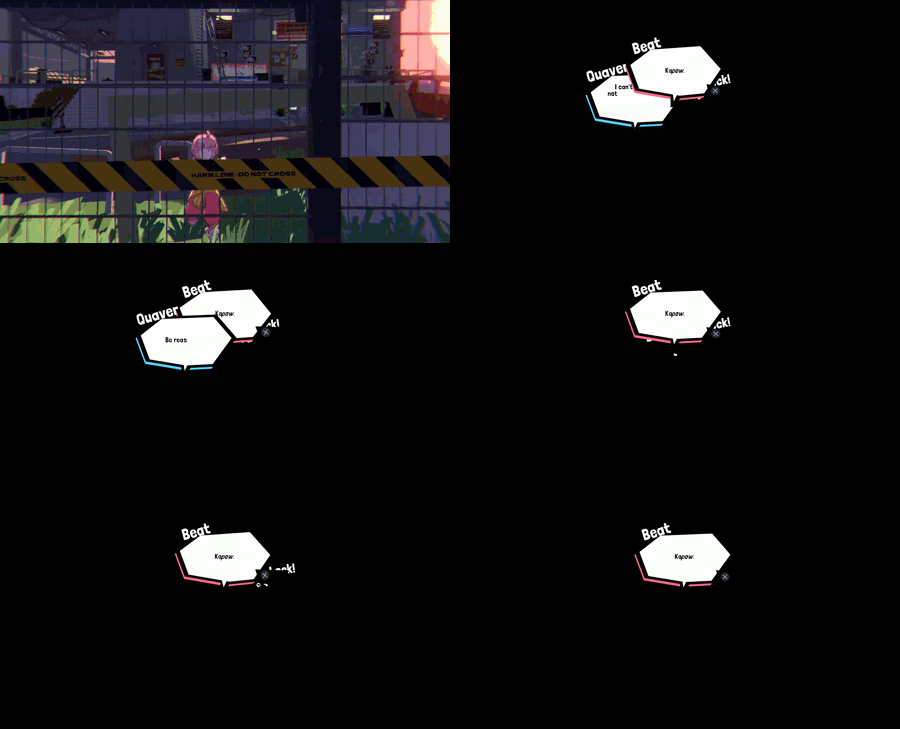
And, okay, those kinds of things happen. I played enough Sonic Adventure on the Dreamcast to know that glitches may occur even when your game has the full support of one of the most prominent giants in the business. But what really scratches my record is when the videogame stops being a working videogame deliberately.
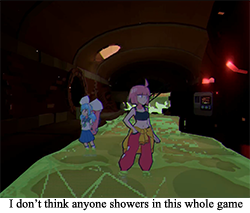 This is an adventure rhythm videogame. The adventure parts of the game are pretty straightforward: talk to the right person, go to the right place, bring the right item to the right person at the right place. That kind of thing. Tried and true, essentially nothing wrong there. The rhythm sections of UNBEATABLE are similarly fundamentally fine. Tap properly to the charts, and hit the right notes at the right time to clear the challenges. You even get ranked at the end of a number of these challenges. Go for those high scores, kiddies! And then there is the third column: the “everything else” rhythm challenges. This is where things get dicey. At the end of Episode 1, Beat has to surf moving cars and sidestep bullets, and it is your job to manage the beat to determine if she gracefully dodges, or has a dramatic uptick of lead in her diet. Similarly, the finale of Episode 2 sees Beat parkour across and up an entire prison, and you are once again responsible for tapping accurately. Set pieces like these recur throughout the game, and are an excellent change of pace from the usual gameplay that is found in Arcade mode. It is like unlocking new characters in a fighting game, right? You already saw all the gameplay available when you booted up the game, but something new is popping up as the game progresses. What crazy thing is Beat going to do next? And how are you going to help her this time?
Well, the answer is, “you aren’t”, because these sections of the game are games in name only. What you do does not matter one iota.
You are supposed to play these I-refuse-to-call-them-quick-time-events with the same precision as the arcade-style rhythm sections. On screen, you are judged with notifications of whether you hit the beat perfectly, missed it entirely, or came close. But can you fail? No. Can you get a “perfect”? Maybe. But if you do, it is not like there is a final judging or such to confirm your accomplishment. You are just pressing buttons along to the beat during what amounts to a cutscene, and any judgments regarding your skills are ephemeral to the point of parody. Basically, for some of the most dramatic chunks of UNBEATABLE, you are little more than a toddler in front of an arcade cabinet with no quarters inserted. Press those buttons, Little Timmy, you’re doing great! Let’s claim you just beat the game! And I’m not just saying that because we have to go shopping for lunchboxes now. Come on, you totally won, let’s go, kiddo.
 These sections are infantilizing. Worse, it completely obfuscates the point of a videogame. Those adventure game parts? They work great, because “you as Beat” make actual choices, and shape the story in a way that would be impossible with UNBEATABLE the Book You Read or UNBEATABLE the Rock Opera You Watch. Those arcade-style rhythm sections? You will feel a sense of accomplishment when you whack around a couple of marketing maniacs that tried to screw up your debut concert. But the “fake” game sections? Where you could just put the controller down and grab a grilled cheese while Beat does her own thing? It is insulting. It inevitably causes a disconnect between the player and the game (“Did… did Beat just get shot? A whole bunch? And it doesn’t matter?”). And the fact that there is so little game there, not even so much as a results screen or an opportunity to try it again (possibly because, like in many “I just heard this song for the first time” situations, finding the beat immediately is not always easy for those of us of the bleach-white, funkless persuasion), it poses the question of why bother? In an extremely personal, enchantingly deep game such as UNBEATABLE, there are whole sections that are so disconnected, they may as well come with a subtitle that says, “Imagine your own game happening here.”
But… ugh… I hate that this all somehow works. To quote UNBEATABLE: “Oh shit, this is a bad idea, isn’t it?” “It is. It is also the only idea.”
Look, I don’t make videogames. I have been shoveling “videogame theory” out into the world for the last decade based only on my experiences playing these things since I was young enough to be that kid getting tricked at the arcade (thanks, dad). You do not know how many times during the previous few paragraphs I wanted to alternate between “game that plays itself is objectively bad” and maybe the whole “what you do doesn’t matter” gameplay is better for a title like UNBEATABLE. After all, I do not want to play that prison escape sequence over and over again because I keep messing up on the battle of the bridge (to be clear, that would be the bridge of the song, not that you fight Gilgamesh somewhere in there). I do not want to be stuck in the final episode because the baseball minigame suddenly returned, and now I must get 85% accuracy to proceed. That sounds terrible, particularly in a title where the plot is so moving that you want to keep it moving. Maybe UNBEATABLE being unlosable is for the best.
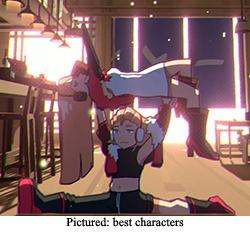 Since it is hard to even think such a thing could be objectively good for gaming, we are going to claim UNBEATABLE is best described as “experimental”. And in a game all about being punk rock… Well… That feels right. UNBEATABLE has a lot to say, but one of its main throughlines is that Beat is a punk rock star that may not entirely know what she is doing. She is going to save the world, she is going to become a rockstar, but she is going to screw up a lot, too. She is going to wake up half dead thanks to the night before an awful lot, just like a lot of us did in our 20s. And those of us that did can look back at that experimental time, and say, “Hey, I might not have actually had all the answers, but I turned out okay.” And that’s UNBEATABLE in a nutshell: it might not have all the answers, it might be downright wrong in a lot of ways, but it turned out okay.
It’s all bullshit. I want to claim this is an amazing game. Or I want to say it is objectively an insult to gaming. But, somehow, it doesn’t matter. UNBEATABLE may not be unbeatable, but it is always going to be one of my favorite games.
FGC #723 UNBEATABLE
- System: Steam is recommended, but all images and reviews are based on the Playstation 5 version. There is also an Xbox X|S version. This now fulfills my obligation of reviewing at least one game not on the Nintendo Switch for 2026.
- Number of players: You know, Gitaroo-Man wedged a two-player mode in there, and it is maybe the best rhythm game ever created. Just saying!
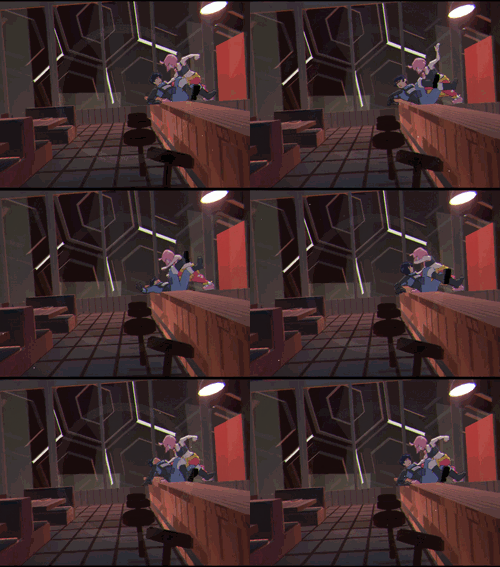 Fill that Plot Hole: I am trying not to spoil any major moments from UNBEATABLE here, as I feel this is a story you should experience on its own terms. That said, there is 100% a canon explanation for why Beat can soak bullets and survive falls that would kill a lesser rockstar, so let’s go ahead and say every bit of any “you cannot lose while cops are shooting at you” section is deliberate canon.
- What’s in a name? I did not get to talk about Quaver… or… uh… pretty much anyone in the supporting cast. Trying to avoid spoilers! That sucks! But I will say two things: Quaver is amazing, and if you name your child “Quaver”, you are a sociopath. There had to be other musical terms available!
- Cryptids: Also, Quaver’s father is a drummer. And Clef, a musical prodigy with a chip on her shoulder bigger than her hair, is a drummer, too. So UNBEATABLE puts forth the theory that drummers can be fathers and/or women. Which seems crazy. Drummers can only be drummers.
- So, are you still racist against DJs? Yes. Now, more than ever before.
- Favorite Song: We are going to say Memorized, because it is an excellent mix of everything that makes UNBEATABLE great. For more information on the specifics of that, please see the previous 3,000 words of this article.
- Speaking of Games Where People Sit in Chairs: This is an adventure game with a jump button, and jumping rarely does anything. It is an essential action, like, twice. And this reminds me a lot of Xenogears! And that may be the best compliment I can give to a game on this blog.
- Taxonomical Distinction: UNBEATABLE does feature a section where you must beat the crap out of people on an infinitely moving elevator, so this is technically a beat ‘em up.
- Think You May Be Able to Use This Later? Oh…
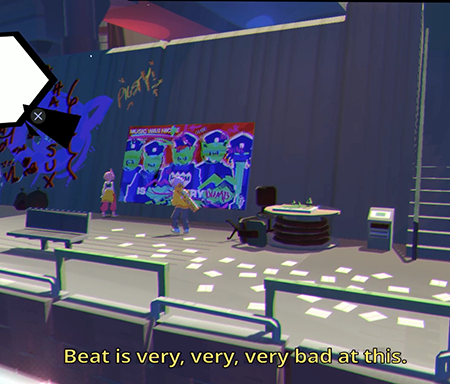
- Favorite Minigame: Prisonball Pool, obviously. Setting the entire second episode in prison is frankly genius, as it is a sort of soft “tutorial level” for how to play the game at large, and you know everything there will suck, because it is a friggen’ prison. So, evidently, playing Prisonball Pool is the pinnacle of this experience, as a game with no rules and no point is an proper way to kill time. And it sure beats being a bartender…
- Achievement Unlocked: The trophies/achievements are overwhelmingly sarcastic, mocking, and occasionally contain art that references Kingdom Hearts. This is the best usage of the trophy system since… uh… Ever.
- An End: I’m not crying. You’re crying.
- Did you know? UNBEATABLE notes that hanging band posters and other small acts of rebellion really bother fascists. So please produce more band posters.
- Would I play again: This whole review was based on a Normal playthrough. We are talking about a roughly ten-hour game here, so I am not going to jump back in immediately, but Hard Mode is on the menu. Maybe it will be different! Maybe it will be somehow better! I don’t know, but it is going to happen!
What’s next? Random ROB has chosen… Overlord: Escape from Nazarick. Does that count as another anime game, or just a regular anime game? Whatever! Please look forward to it!
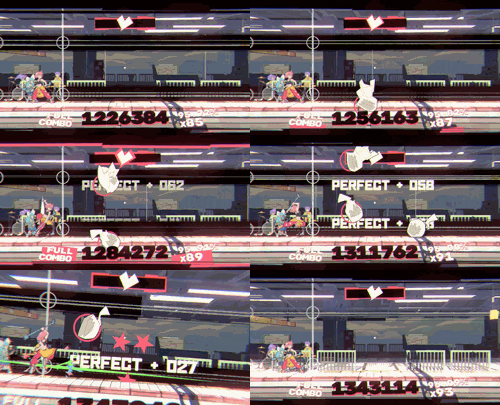
Now I can just play arcade mode while I wait for every other game on the PS5 to install