

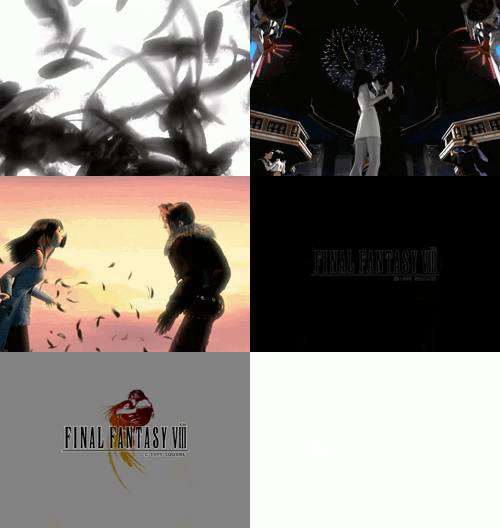
 Laguna Loire is the best damn character in all of Final Fantasy, and it is entirely because the directors of Final Fantasy decided to flip the script on a decade of scripts.
Let us consider the history of plots in Final Fantasy. In Final Fantasy, the Light Warriors, your playable characters, were little more than blank slates that you steered around the world. This was a basic story of swords and sorcery and ancient (flying) civilizations, but there was not much more than that. If there was a “twist” anywhere in the writing, it was that Garland, a Level 3 Knight that you stomp within ten minutes of booting up the game, is revealed to be the ultimate source of all misery in the world for 1,000 years. But there are also really good odds you have forgotten who Garland even was at that point, so it is clearly not the point of the story. Basically, it is a fun little 11th hour twist that could be utilized some decades later to bolster the best videogame ever made.
Final Fantasy 2 pulled a similar trick: if there is a twist anywhere, it lies with the revelation that the Dark Knight that has been a thorn in your side for multiple chapters is actually your former friend and brother… uh… that guy. No, not Guy! But he definitely had a name! Oh! And there’s a fake out with the villain of the piece roaring back from Hell, but you probably guessed something like that would happen when the game did not immediately roll credits after his initial defeat. Regardless, the only nuance that separates Final Fantasy 2 from a toddler’s tale of high adventure is that there are a few familial bonds that snuck in there to make it a lil’ Star Wars.
Final Fantasy 3 was lousy with twists and turns, and it is clear the writers were now completely aware of the medium of videogames and its advantages for storytelling. Your heroes are anonymous again, but they live in a tiny pastoral village. Oh, wait, turns out that village is the only safe zone on the entire continent. Oh, turns out that continent is flying in the sky over a dramatically larger world. Oh, turns out the rest of the world has been flooded and frozen in time. We got the world spinning again, but it turns out there’s a gigantic city having a civil war over there. Oh, and turns out the cause of every problem ever is a whole other world that is starting to seep into ours with a particularly malevolent cloud. Twist after twist after twist, and if you think you know what is coming next in Final Fantasy 3, no you don’t.
Final Fantasy 4 went in the complete other direction. Yes, there are mysteries abound with underground civilizations and whalers on the moon, but the big story this time is that you finally have characters with character. Cecil must overcome his inner darkness. Rydia must grow from child to adult in more ways than one. Kain has to stop creeping on his best friend’s fiancée for, like, three seconds (and cannot pull that off). There are noble sacrifices! Children terminating their own futures for the future of the planet! At least one mirror dad! It’s all comics/anime/nonsense for teenagers-level drama, but it is drama. And, yes, Tellah transforming his lifeforce into magic points does hit a little harder when you have been steering the old man through a pile of dungeons.
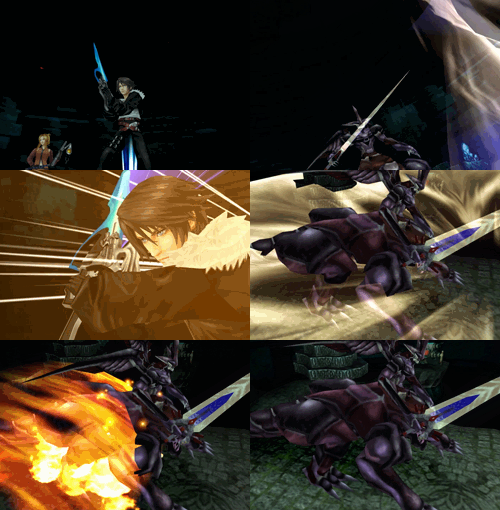 Final Fantasy 5 was in many ways the combination of everything that came before. There are pirates with secret identities, wanderers with holy war genealogies, and old men sacrificing stamina for meteor strikes. But there are also hidden worlds, combined universes, possessed kings, and an ultimate villain with a surprisingly confusing backstory for a stick. In much the same way that you could never quite know what would be the climax of Final Fantasy 3 (gas lady), Final Fantasy 5 was full of twists and turns on the way to its finale (tree man).
And it was… pretty alright. I guess.
To interrupt the timeline here for a moment, Final Fantasy 5 was released five years after Final Fantasy (1). That’s long enough for Final Fantasy to graduate high school and spend a year on the couch telling their mom they are totally going to go back to school next semester. And, to look at the plot of Final Fantasy 5 versus Final Fantasy, you may as well be dealing with stories that are on different planets (which they are). Final Fantasy contains a fun world with interesting monsters, but Final Fantasy 5 advanced to merging dimensions and nuanced protagonists. Nobody is going to claim that Faris Scherwiz could be mistaken for Hamlet (I will later, so stay tuned!), but there are light years between Faris and the anonymous Black Mage that preceded her in the FF pantheon. In the same way that anyone could identify the significant graphical improvements between games, Final Fantasy 5 was downright revolutionary in its storytelling.
Aaaand it’s kinda meh.
Again! Final Fantasy 5 is great! Love that game! But let’s be honest: it’s overall plot, characters, and story are typical “heroes save the world” fare, and you would have to change nothing to stick it on Nick Jr. (give or take that scene where Galuf questions his sexuality). What’s more, this is a story that could be told anywhere, and in any medium. And while everyone likes versatility, this is a videogame. If you are making a videogame, why not tell a story that could only be told with a videogame? Save something that requires an anime for Final Fantasy: Legend of the Crystals, and work with the medium you got, guys.
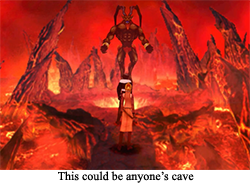 To now resume the order, Final Fantasy 6 was an even better game… but its story pacing was atrocious. Or, perhaps it is better to say that Final Fantasy 6 is about how a bunch of rebels cannot save the world from an evil empire, and the world is destroyed because twelve weirdos were never going to make a difference in the face of some clown with a (magical) bomb. And then the second half of the game is the fanfic sequel where all the heroes do win… but they only have three lines of dialogue each (and a yeti [original character, do not steal]). A few characters, like Terra and Celes, have story arc throughlines, but even their attendant deuteragonists only exist for a few flashbacks and magicite raids. Final Fantasy 6’s World of Ruin was an amazing boon for the concept of gameplay (explore a whole new, but vaguely familiar world! Find your friends!), but storytelling jumped straight off a cliff to get there.
Final Fantasy 7? Now there is something special.
The big twist of Final Fantasy 7 is that your villain is not actually your villain, and your hero is not actually your hero. The villain switcheroo is pretty common in this franchise (reminder: we already fought a secret tree), but what is important about Sephiroth was Dead the Whole Time (Kinda)™ is how it serves the story of Cloud Strife. Cloud is introduced like so many other RPG heroes: he is hyper competent, vaguely stoic, has a tragic past, and he is the only guy with a sword for miles that can clear out all these monsters. But cracks in this persona are revealed in ways both subtle and overt, and, by the time that “villain” is up in your face and taunting player and protagonist alike, you learn that Cloud is not the Cloud that was initially presented. But! While Cloud may be a Zack clone/fanboy, there is more to Cloud than even he knows. He did defeat Sephiroth back in the day! He is a hero, through and through! And, as I’ve lamented before, the only downside to this amazing bit of storytelling is that it comes at a proper point in the story (call it the emotional climax) but not the game (the literal ending), so people (and sequels!) have a tendency to focus on the ambiguous “12 minute ending movie” more than the true centerpiece of Final Fantasy 7. Tifa exploring Cloud’s memories and answering questions that have existed for hours is something that could only work so well in a videogame. If this were a passive TV show, it would just be “a flashback episode”. Here, somebody at Squaresoft finally decided to use the medium of “press X to fight” to create moments that are both elucidating and interactive.
And after that brief (ha!) history of storytelling in the franchise, we are going to go down two different branches.
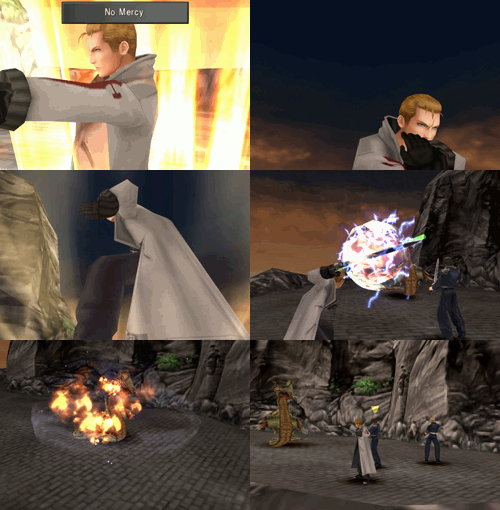 On one path, we have the textual continuation of Final Fantasy 7: “What worked in Final Fantasy 7 was the shock, and playing with identity”. From here, you get revelations in later Final Fantasy games like Final Fantasy 9’s main hero and villain being clone monkeys from space, or Final Fantasy 10’s focus shift of the summoner being the center of the universe, not Mr. Dream. Additionally, about 90% of the reason you need a chart to understand the relationships in Kingdom Hearts is the simple drive to reveal that the villain is not one guy but thirteen guys who are all actually just that one guy (but older). The twist is the point, and playing more Final Fantasy games (and its many RPG descendants) always leads to half the fun being eyeing the bubbly, pink haired supporting character and saying aloud, “Oh, she must be hiding something.”
And then there’s the other possibility of storytelling after Final Fantasy 8: explicit yelling.
Final Fantasy 7 was not understood by much of its audience. Then and now, the two most important things people remember about Final Fantasy 7 are…
- Aerith done died
- Cloud really hates that ol’ Sephiroth
Cloud’s identity issues are one of those things that people remember in a sort of “oh yeah” recollection, and the nuance of Tifa being a better therapist than a pugilist is almost entirely forgotten. And, while Squaresoft is happy to merchandize more statues of Cloud fighting than holding his head and wiggling, there had to be at least a few people in FF7’s development that were annoyed that the sensitivity of Cloud’s character was forsaken for omnislashes. Could something have been done to reinforce the comprehensive story over the big, showy moments? Could an audience be encouraged to better understand their protagonist? What’s an RPG writer to do?
Beat the player over the head with soliloquies.
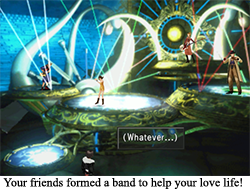 Before we finally get to talking about Laguna, we’re going to look at the actual protagonist of Final Fantasy 8, Squall Leonhart. Squall is messed up. He is expected to be an upstanding child soldier (he’s 17!), and projects a persona of being selfless, cold, and composed. Quistis, Squall’s teacher and eventual work buddy, is introduced early almost entirely for the purpose of noting that if you hang around Squall long enough, you will have all his verbal tics memorized faster than anyone can say “whatever”. But before we meet Quistis, we see Seifer. Who is Seifer to Squall? Well, according to Squall’s inner monologue, Seifer is Squall’s entire world.
If we really want to psychoanalyze Squall, let’s go ahead and claim he has autism, and hyper fixates like his fans updating his Kingdom Hearts wiki. Squall thinks about a lot of stuff, but Seifer is number one with a blade-bullet from the start. They duel together. They take tests together. They patently do not hang out together, because Seifer has other friends, and Squall can barely make eye contact with them (though Fujin does make that difficult). And when it looks like Seifer has straight up died? It is all Squall can think about. He snaps at his friends (that have already been about 1,000% more supportive than that dead creep) so he can privately mourn the loss of a guy who just tried to murder a politician on live television. And the whole flashback reveal? It adds the tiniest bit of shading to these characters, but, more importantly, it reveals that Squall has always been like this. The point of the flashback isn’t supposed to be a dramatic plot twist; it is confirmation that Squall has been obsessed with Seifer and being “the cool one” literally as long as he has been alive. Ifrit may have eaten his memories, but Squall has been laser-focused on the persona that is reinforced repeatedly in dialogue and internal monologues. This is why Rinoa is such a revelation: she is the one animal/plant/mineral on their planet (and off of it) that gets Squall to try something different. Sure, some of his post-Rinoa moves are a tweak self-destructive, but running down those train tracks to nowhere is something new. Final Fantasy 8 is not subtle: if Squall kept focusing on Seifer forever, he was never going to make any progress as a person.
And now we can talk about Laguna.
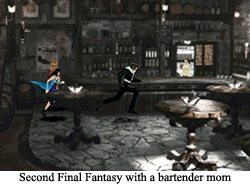 Saddest thing I might ever say: Final Fantasy 8 could drop Laguna Loire entirely, and nothing would be lost. Or, to be precise, nothing would be lost from the “main” story of Final Fantasy 8. Squall and Rinoa are the center of this universe (and the logo), and you do not distinctly need to know that their parents used to bang to enjoy that story. Ultimecia, the main villain of Final Fantasy 8, must capture someone close to Laguna to see her evil plan come to fruition, but Laguna himself is not important to her machinations beyond his ability to stymy her plans one (1) time. You get right down to it, Laguna is downright inconsequential to the world of Final Fantasy 8, and you could easily replace his position as “Esthar President” with, like, a talking dog.
On the other hand, Laguna Loire is the one thing that makes Final Fantasy 8 work.
Laguna’s whole story is simple: he’s a soldier who is soon injured. While recovering, he falls in love with the woman who nurses him back to health. They marry, and Laguna adopts that kid that has been hanging around. When said daughter is kidnapped, Laguna goes on a quest across the world to rescue her. He ultimately succeeds, and is rewarded with ruling a nation. Be a warrior, fall in love, save the princess from the evil queen, become king. It is a fairy tale starring the man with the machine gun.
But Laguna’s life is no fantasy. He meets a gorgeous woman who reciprocates his advances, but the relationship goes nowhere thanks to his deployment. He drops out of the armed forces because he and his friends were permanently disabled from combat. He finds a family, but loses all of them for years (or permanently) thanks to outside (of time!) malevolent forces. Laguna tries to make the right decisions throughout his life, but, over and over again, catastrophe occurs. Laguna perseveres, but for a little over twenty years (how old is Squall again?), practically every move the man makes leads to tragedy.
And you know it’s a tragedy because Laguna won’t stop telling you about it.
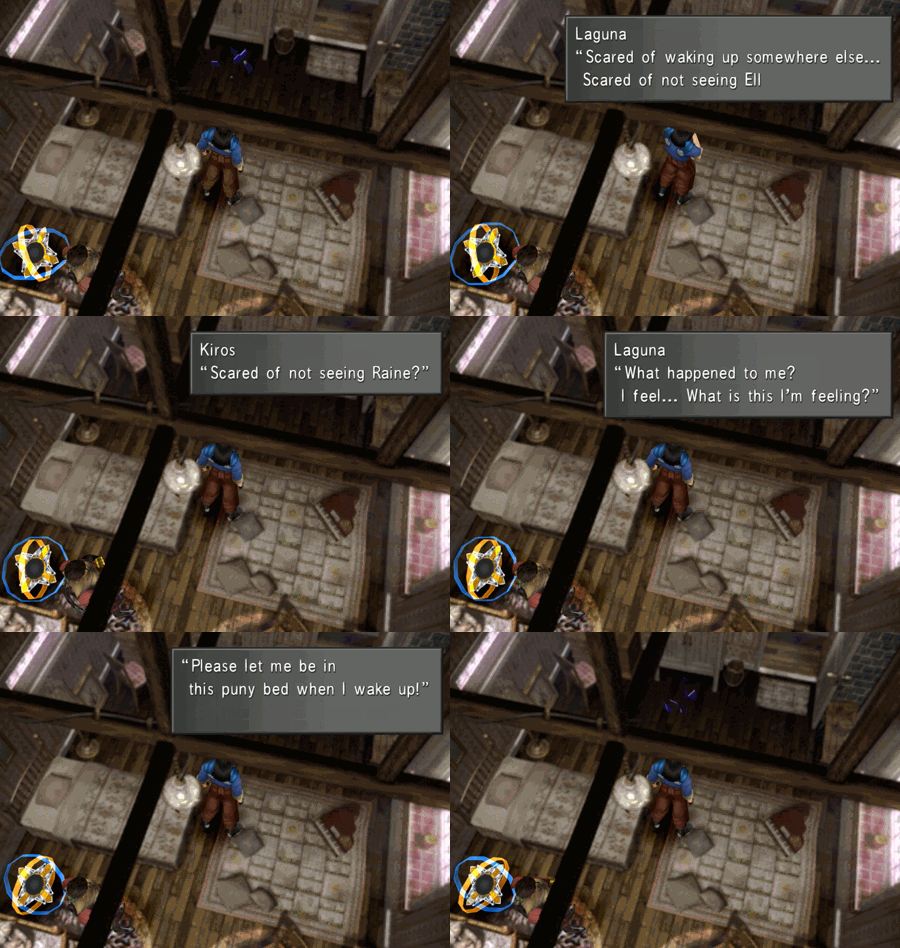
You spend… what? Maybe a couple of hours with Laguna? You start with his introductory “dungeon”… which is approximately two screens before you passively watch him learn how to flirt with a pianist. Then you’ve got his longest area, Unexcavated Lunatic Pandora, which is a complete dungeon (though one that can be over very quickly if you make a beeline for Laguna’s fated encounter). Second runner up on length is his time in Winhill, which is almost literally a walk around the block. Then we have a quick fight against a dragon to prove Laguna’s adventures are suitably whacky. Finally, there is the Lunatic Pandora Research Facility, which is two battles and a whole lot of dialogue. And that’s it! My first time through Final Fantasy 8, I literally never saw any of the limit breaks of Team Laguna, because they are active participants in this game for a handful of battles and one (1) creature that might be considered a boss. Laguna Loire time “as a party member” doesn’t add up to rival all the minutes Cloud Strife spends playing minigames.
Conversely, I can tell you more about the interiority of Laguna Loire than the entire rest of the playable cast (minus those two dorks in the logo). Laguna Loire is a soldier, but he does not see violence as an answer to problems. He is an adventurer in the classical sense of the term, and is not so much interested in slaying dragons as just earning enough scratch to move to the next town. He’s poor. He’s a writer. I get that that is redundant, but it is part of who he is. He likes seeing the world, and is anxious to tell others about it. Laguna Loire is a wife guy, but he’s even more of a father, and the fact that both of those commitments simultaneously drive and deter Laguna is the misfortune that is his entire adult life. He just wants to get back to his family! And there is a damned sorceress in the way! At least his son will take care of that issue… eventually.
And that is the central writing conceit of Final Fantasy 8: this is a generational tragedy. You “play” as both sides of the timeline, and more importantly, you feel this heartbreak because nobody shuts up about it. And before anyone wants to claim “You can’t just have your characters announce how they feel!”, and subtlety is the mark of a great writer, let me go ahead and claim that this guy…
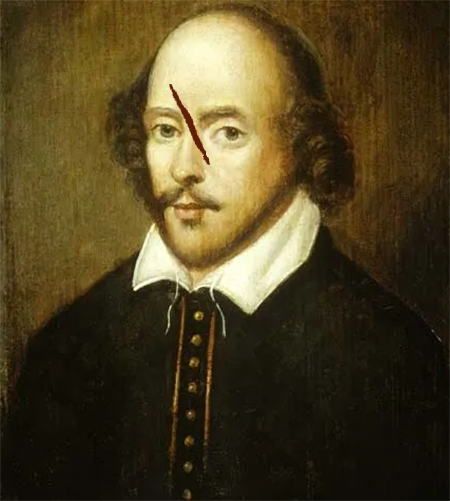
Wrote nothing but plays where dudes and ladies were shouting their feelings at all times. He had a pair of teenagers running around and shrieking about yonder window breakage, and it was somehow the greatest love story of all time. Final Fantasy 8 was clearly drawing some inspiration there, and decided to give Romeo & Juliet a side of Macbeth for the road. Don’t worry, Laguna! Life’s but a walking shadow, a poor player, that struts and frets and eventually makes foul fair!
Unfortunately, it’s been over 25 years, and apparently they are still not teaching Final Fantasy 8 as part of our educational system. Yes, this could be another reason to note that our public schools are failing, but it is more likely that the issue here is simply that what works in 1600 AD does not work on a Playstation in 1999. Final Fantasy 8 was a literary risk, and, given the public reactions to “mopey” Squall, this increased protagonist interiority did not have the desired effect of catapulting Squaresoft into the Shakespearean stratosphere. More’s the pity…
But we did have the greatest character in the franchise there for a few minutes. So good job being transparent, writers.
(I feel satisfied with this essay, so this is the part where you are supposed to feel fulfilled. Please do so now.)
FGC #706.2 Final Fantasy 8 Remastered
- System: Final Fantasy 8 was originally just on the Playstation, but this article was prompted by a Switch playthrough of this Remastered version. The script is unchanged.
- Number of players: Team Laguna should have their own Mario Party-esque sequel. Laguna always loses.
- Other Forms of Bombast: When Final Fantasy 8 has its giant, all-encompassing battle scenes with dramatic sweeping angles, it is certainly following the same writing that gives us Laguna shouting his feelings. Raiding Galbadia Garden might not be quite the same as a writer standing around and being sad in his bedroom, but it is another obvious place where subtlety gets kicked to the curb. And added bonus? Those 1999 advanced graphics are a lot easier to advertise.
- Unanswered Questions: What is Snorlax doing here?
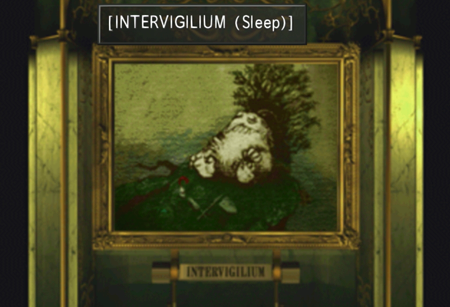
Go sleep somewhere else! - Further Laguna Questions: It is certainly a choice that Laguna’s final assault on Ultimecia/Adel is exclusively told during flashback, and is patently not a playable sequence. Was it cut content? Was it too hard to wedge in a reason for Ellone to transport the party at that point in the story? Pacing issue? Whatever the case, it would have been an excellent excuse for Laguna and friends to have one capper boss fight against an un-junctioned Adel.
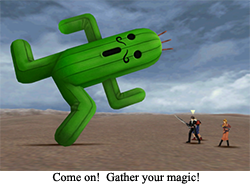 An End: Ultimecia’s final castle being the largest dungeon in the game by a mile was an excellent excuse for “Time Kompression” and cutting off the rest of the world. Yes, it was just to conserve disc space for one final movie that is long enough to tape and rewatch with your prom date, but it does give us a dungeon that feels like a world onto itself. Also, while I’m in a Laguna mood, I am going to note that Time Kompression would have been an excellent excuse for Young Laguna and Squall to work together before Dissidia…
- Say something mean: Returning to Winhill just to reassemble a vase feels like a major waste of an important location. Helping Laguna’s lost Moomba friends with an art project at Shumi Village feels… Well, it feels like something.
- Did you know? To examine other extraneous characters, Fujin and Raijin were supposedly designed to be the Biggs and Wedge of Final Fantasy 7 (well, the malicious version), but were dropped because The Turks filled the same basic role of comedy antagonists. Glad to see they returned to be used in some capacity, because it would have been a real shame if we didn’t get their kiddy versions in Kingdom Hearts.
- Would I play again: I am done talking about Final Fantasy 8! For now! We’ll see if I have more to say in another decade. Maybe I’ll finally get around to addressing Triple Triad.
What’s next? Random ROB has chosen… G.I. Joe: A Real American Hero! G.I. JOOOOOOOOOOOOOE! Please look forward to it!
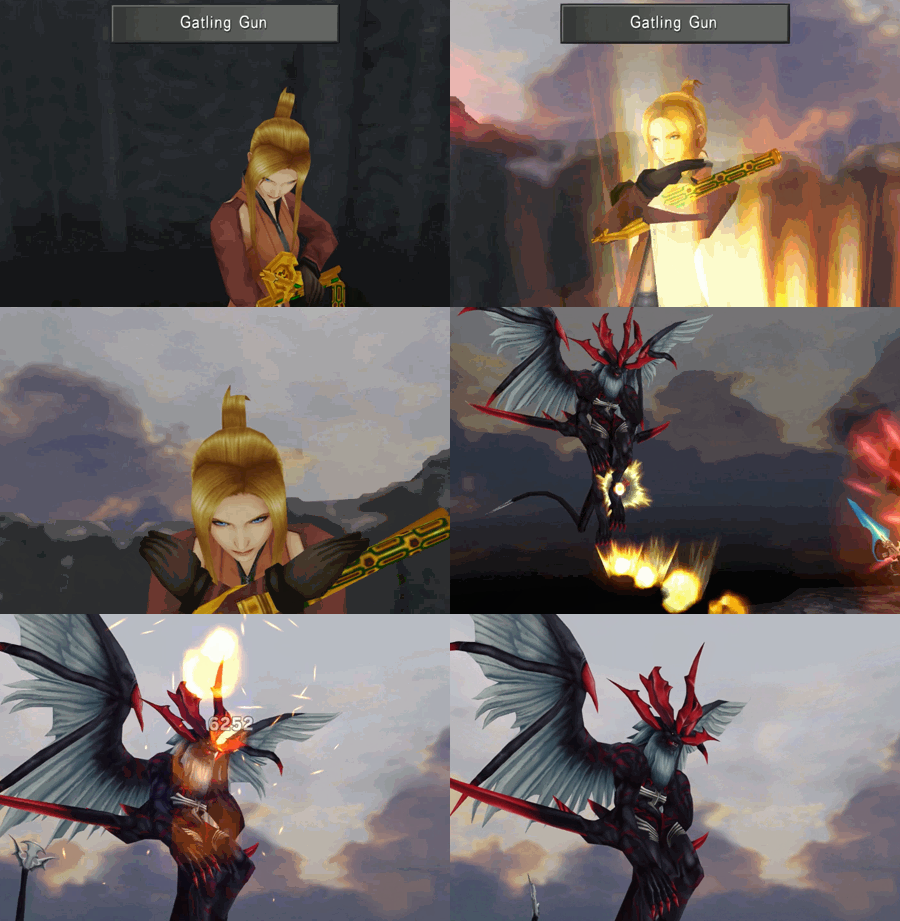
This didn’t really have a place in either of the articles, but I like to see it